From Reus to All of Europe: InclusiveFuture’s Local Trainings Multiply the Impact of Sustainable, Inclusive Education
The international mobility held in Reus last May was only the starting point. Since then, the InclusiveFuture project has carried its inclusive pedagogical model and the European GreenComp framework into classrooms across eight countries, through an ambitious cascade training process that has far exceeded its own targets.
The Cascade Effect in Motion
InclusiveFuture's philosophy rests on a clear conviction: transnational mobility is only the first step towards genuine change. This is why the teachers, school directors and pedagogical experts who took part in the international training in Reus did not return home as mere attendees, but as Change Agents, tasked with replicating what they had learned among their own colleagues.
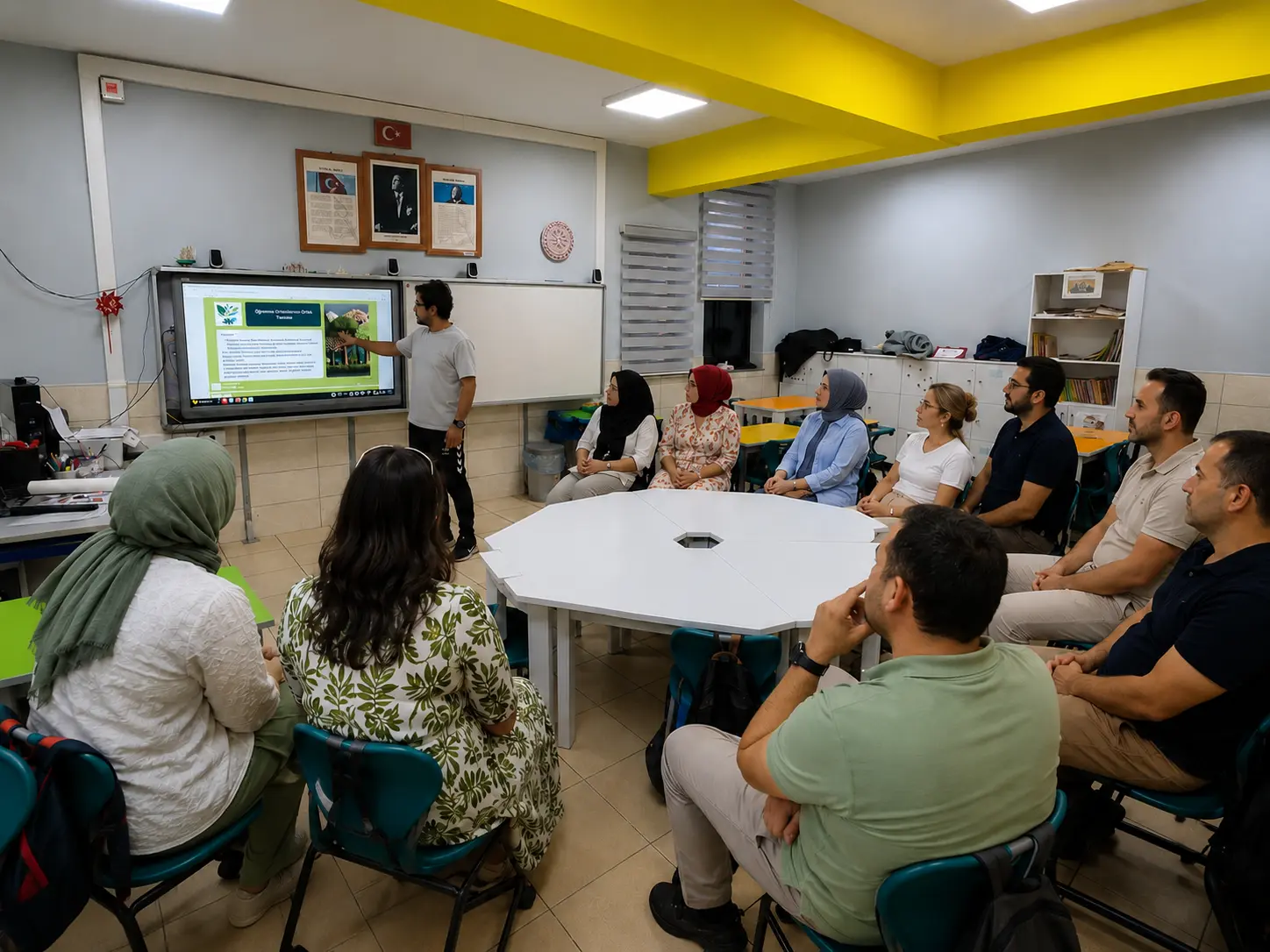
This process required each partner organisation to train at least 20 local peers, with a joint consortium target of 200 trained educators. The result has far surpassed that goal: 20 local training sessions organised in Bulgaria, Finland, Greece, Hungary, Portugal, Romania, Spain and Türkiye have reached a total of 296 teachers, school directors, special educational needs specialists and support staff.
A 25-Hour Training Model, Adapted to Every Context
Each local training followed a common 25-hour framework, combining introductory face-to-face sessions with autonomous learning through the InclusiveFuture MOOC. While the exact format - face-to-face, online or blended - was adapted to each school's and country's reality, all sessions shared the same core pillars:
- An introduction to the project, the GreenComp framework and the Inclusive Pedagogical Model.
- Autonomous MOOC study, supported by continuous contact with facilitators and the creation of peer-support groups.
- Practical, collaborative activities, such as the Activity Planning Sheet and the Inclusion Challenge.
- Micro-teaching sessions, in which educators designed and practised inclusive sustainability mini-lessons.
- Closing reflection sessions, where participants shared implementation ideas and prepared their next steps.
Evaluation data confirms the success of this approach: participants rated both facilitator preparation and the practical usefulness of the materials and the collaborative atmosphere of the face-to-face sessions very positively.
Concrete "Monday Morning" Commitments
Beyond the numbers, what sets this phase of the project apart is its practical focus. At the end of each session, teachers were asked to identify one concrete action they would implement in their classroom the following week. The most common commitments included introducing more inclusive assessment methods, using cooperative learning with clearly defined student roles, integrating sustainability themes into existing lessons, and involving families in school activities.
What Comes Next?
The local trainings mark the completion of the peer-to-peer knowledge transfer phase, but the journey of the Change Agents continues. The project now moves towards a whole-school approach, through three new stages:
- School Workshops: practical 4-hour sessions designed to extend the impact beyond the initial cohort, aiming to reach 100 additional members of school staff.
- Community Laboratories: activities that will directly involve students and families, generating the evidence needed for the next phase.
- Green Certification: a three-tier European recognition system - Bronze, Silver and Gold - rewarding schools that embed sustainable and inclusive practices, with visibility on an interactive digital map at European level.
In this way, the knowledge shared in Reus keeps expanding, classroom by classroom and school by school, in a process that places teachers themselves at the heart of the drive towards a more inclusive and sustainable education across Europe.